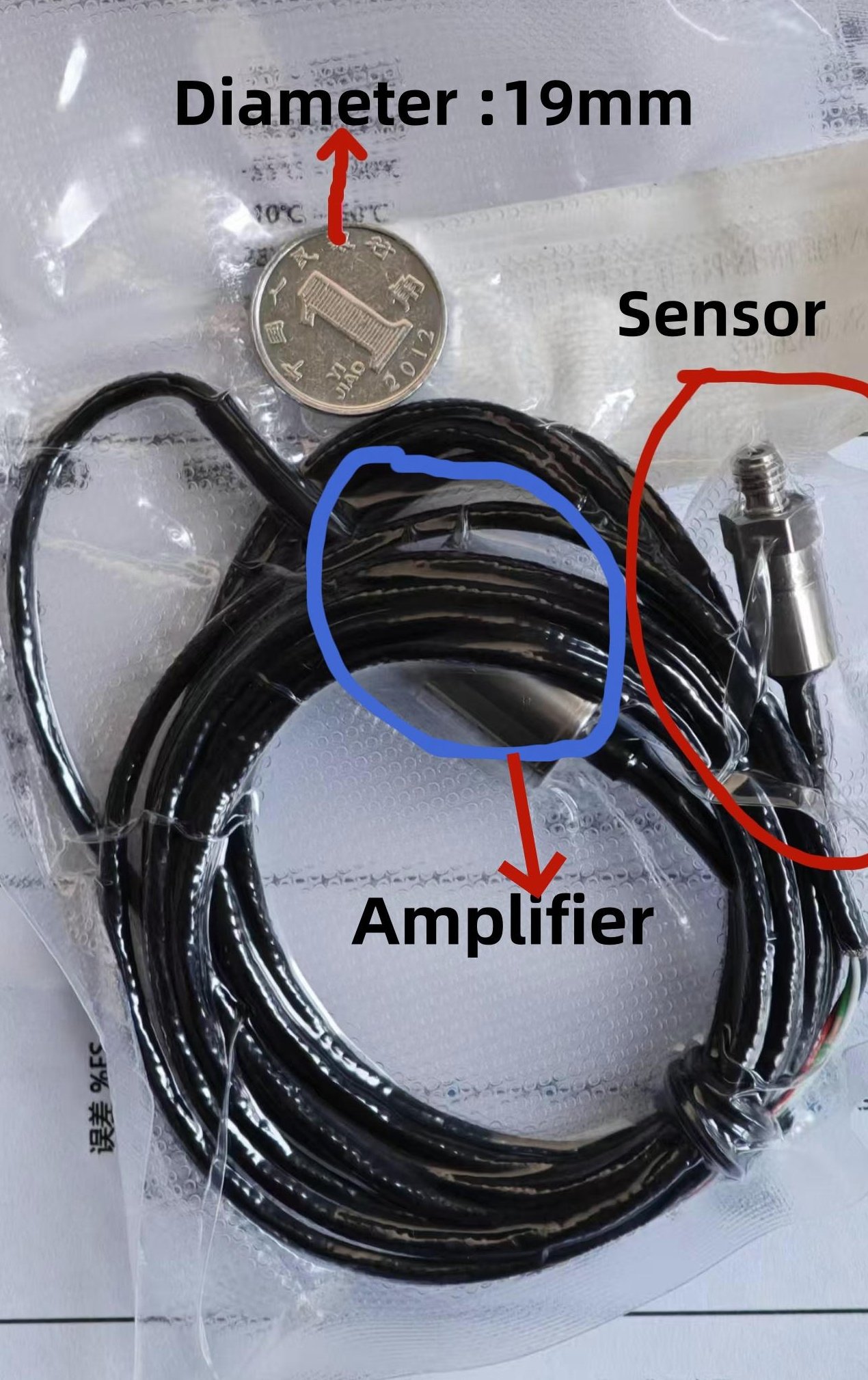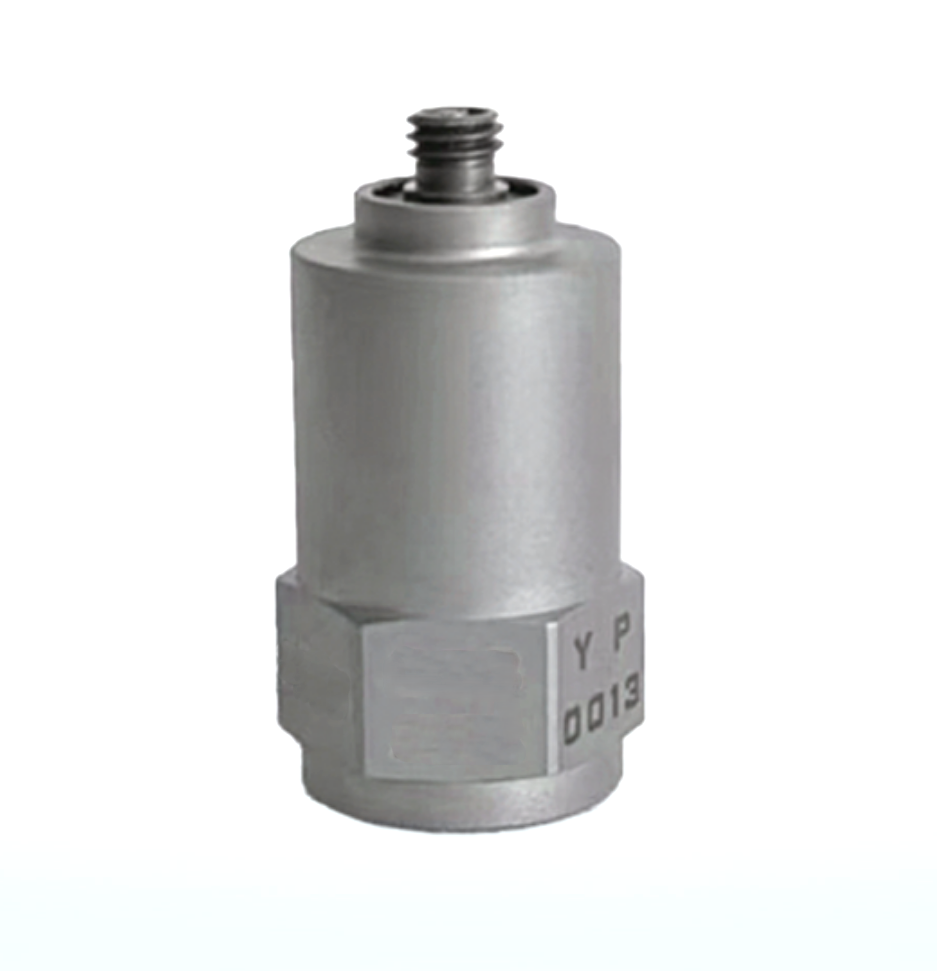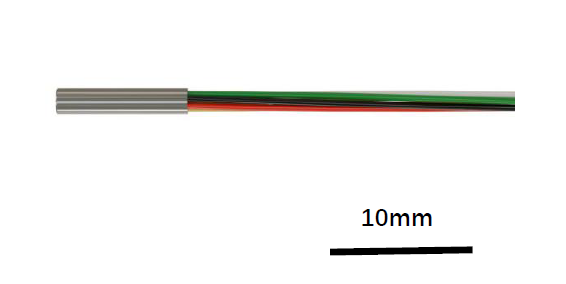
“Ultraminiature” is used loosely in this industry. You will find products with that label weighing anywhere from 0.2 g to 140 g. They are not interchangeable. They mount differently, respond differently, and cost differently.
Picking the wrong size class is the most common mistake in sensor selection, and the most expensive one. It usually shows up late. The sensor arrives, and it does not fit the port.
This guide covers four size classes, five questions that narrow the choice, and how to compare datasheets without getting misled. It ends with a cross-reference table for common equivalents.
1. What “Ultraminiature” Actually Means
There is no agreed definition. Each manufacturer draws the line where its own product line ends. A datasheet calling a sensor “ultraminiature” tells you very little on its own.
Three measurable specs matter instead:
- Diameter — decides whether it fits the mounting boss
- Thread — decides whether it threads in at all
- Weight — reflects package and internal structure, and it drives dynamic behaviour
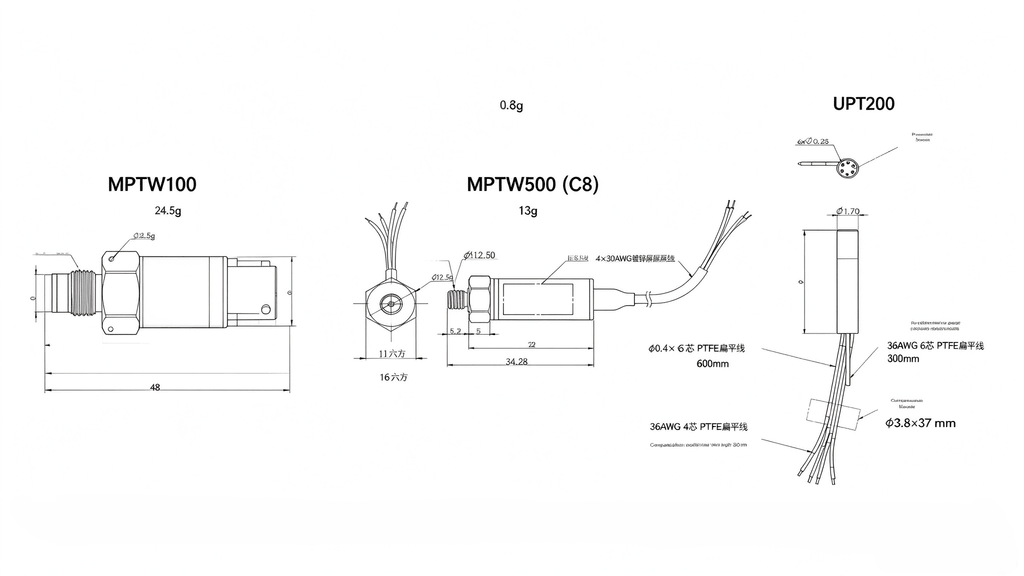
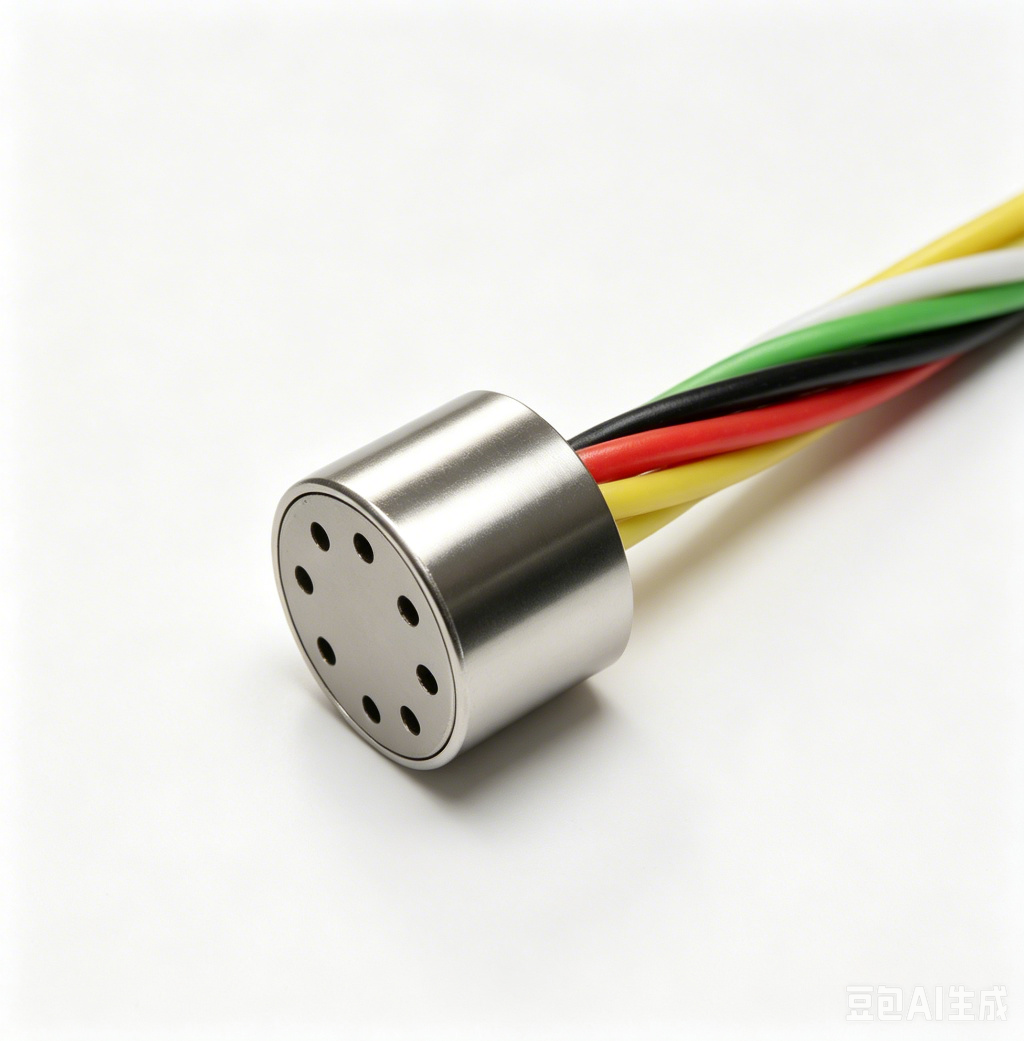
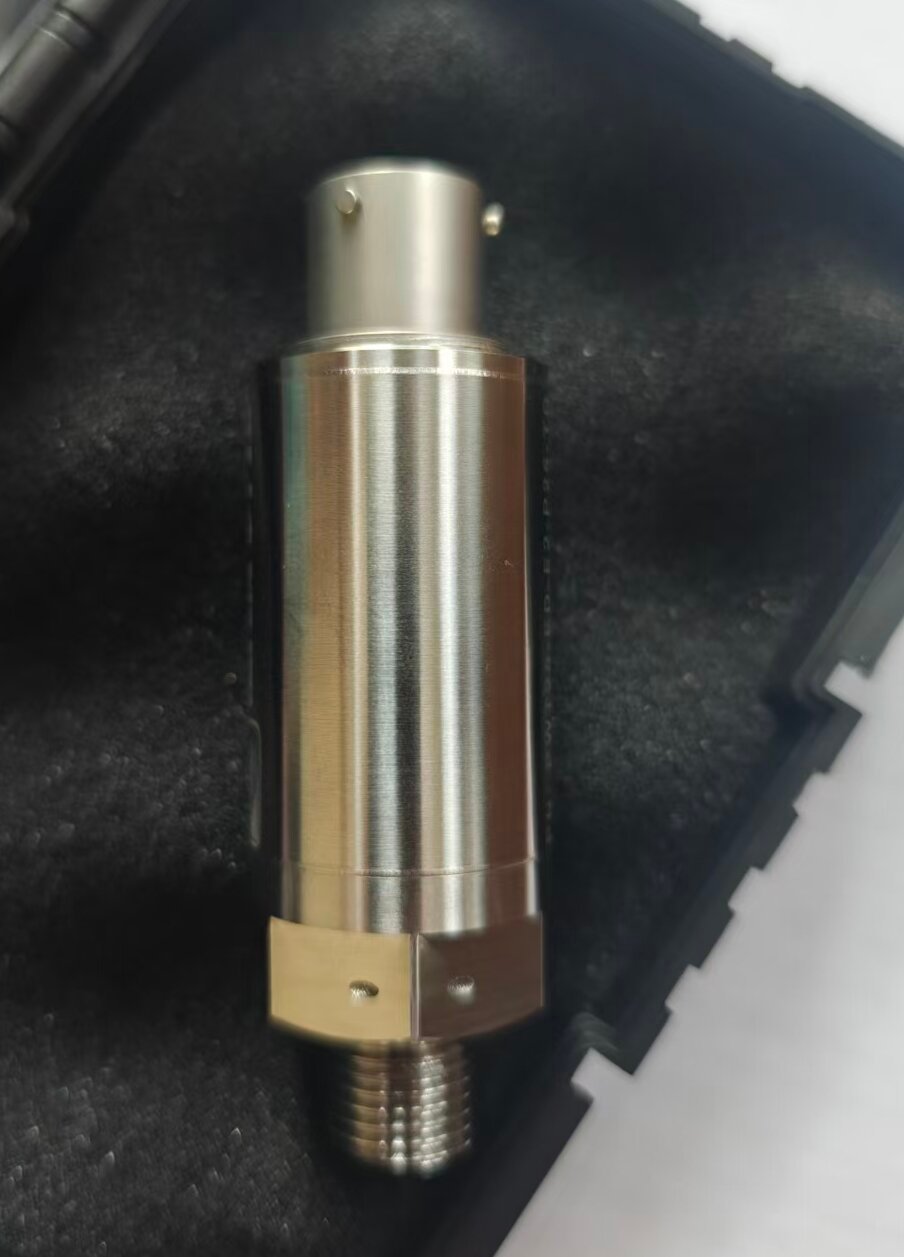
alt="Ultraminiature pressure transducers in three size classes: 0.6 g, 13 g and 24.5 g"
Weight is the most useful proxy. It captures housing thickness, diaphragm size, and how much electronics sit inside the body. A 0.6 g sensor and a 24.5 g sensor are not the same product in different sizes. They are built for different jobs.
One caution on model numbers. Some manufacturers encode diameter in the suffix. A “062” suffix often means 0.062 inch. That is a convention, not a standard. Check the outline drawing before you specify.
2. The Four Size Classes
Size class is not a price tier. It is an application tier.
Table 1 — Size classes at a glance
| Class | Typical weight | Typical thread | Dynamic / static | Typical use | DABEY model |
|---|---|---|---|---|---|
| A — probe | ≤ 1 g | None, or probe-integrated | Dynamic | Wind tunnel rakes, model surface pressure, impact work | UPT200 (0.6 g) |
| B — miniature | 10–15 g | M5×0.8, M3.5×0.6, 10-32 UNF, M8×1 | Both | Engine test, hydraulic test, general industrial | MPT500 / MPTW500 (13 g)<br>MPT800 / MPTW800 (15 g) |
| C — compact | 20–30 g | M10×1, 3/8-24 UNJF | Static | Plant automation, petrochemical, shipbuilding | MPT100 / MPTW100 (24.5 g) |
| D — system | > 100 g | 7/16-20 UNJF, NPT, G, with MIL connectors | Static and differential | System-level aerospace, differential measurement | MPTW250 / MPTWD250 (140 g) |
Class A — probe. Under 1 g. No thread, or a mounting method specific to the application. Used in pressure rakes, model surface measurement, and impact testing. The sensor is embedded in a probe rather than screwed into a port.
Class B — miniature. 10 to 15 g. M5×0.8, M3.5×0.6, 10-32 UNF and M8×1 threads. Covers both dynamic and static work. Most engine test and hydraulic projects land here.
Class C — compact. 20 to 30 g. M10×1 and 3/8-24 UNJF. Built for static measurement in industrial environments.
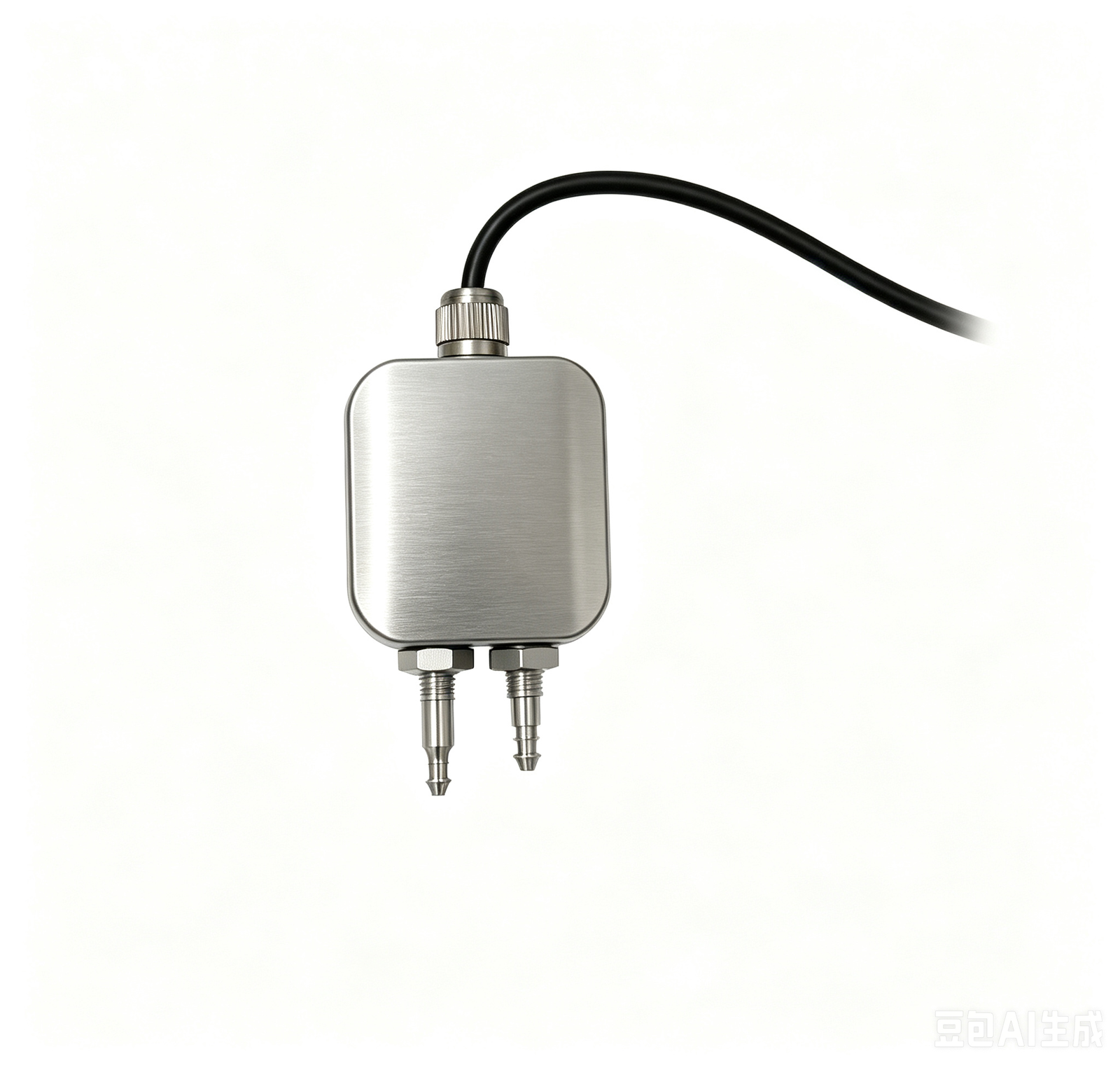
Class D — system. Over 100 g. Large ports, wet-wet differential construction, and MIL-spec connectors. Used when the sensor is part of a system rather than a single point measurement.
Here is the part that catches people out. Class A and Class C are not separated by price. They are separated by whether the sensor fits. If your port is M5, a Class C sensor is not an option. Its accuracy does not change that.
3. Five Questions That Narrow the Choice
Ask them in this order. Changing the order is how projects go wrong.
1. What is the mounting space and thread?
This decides the size class. Everything else comes after. Read the drawing, not the model name.
2. Is the measurement dynamic or static?
Dynamic work needs high natural frequency and usable bandwidth. Static work needs accuracy and long-term stability. A sensor optimised for one is rarely the best choice for the other.
3. What signal does your DAQ accept?
mV, 0-5 V, or 4-20 mA. This is where the most money gets spent by mistake.
4. What is the temperature range?
Note the difference between the operating range and the compensated range. They are usually not the same number.
5. What is the media, and do you need differential?
Decides housing material, whether the construction must be wet-wet, and whether a system-level package is required.
4. Output Signals: Where Projects Overspend
There are two families of output. They ask you to spend money in different places.
Passive mV output. The sensor is a Wheatstone bridge. It needs external excitation and external amplification. Typical output is 0-100 mV.
Integrated output. The sensor does the work internally. Typical outputs are 0.5-4.5 V, 0-5 V, 0-10 V, or 4-20 mA.
Neither is better. They move cost.
With mV output the unit price is lower. You then add an amplifier, a shielded cable run, rack space, a calibration step, and one more item that can fail. With integrated output the unit price is higher, and the signal chain disappears.
Table 2 — Output types
| Output | Supply | Wiring | Strength | Trade-off |
|---|---|---|---|---|
| 0–100 mV, ratiometric | 10 VDC | 4-wire | Lowest power, fastest settling, lowest unit cost | Needs external amplification |
| 0–100 mV, regulated | 8–16 VDC | 4-wire | Output independent of supply variation | Same as above |
| 0.5–4.5 V | 8–32 VDC | 3-wire | Feeds an ADC or ECU directly | Power-up time up to 200 ms |
| 0–5 V / 0–10 V | 8–32 / 14–32 VDC | 4-wire | Connects to PLC and DAQ directly | Power-up time up to 200 ms |
| 4–20 mA | 12–28 VDC | 2-wire | Long cable runs, industrial standard | Slower response |
A short way to think about it:
If your DAQ accepts 0-5 V and you buy an mV sensor, the saving on the unit price goes into an amplifier — and you have added a component that can fail.
alt="Wiring comparison of 0-100 mV and 0-5 V pressure transducer outputs"
Watch the power-up time. Passive mV sensors settle in under 1 ms. Digitally compensated outputs need up to 200 ms. On a fast transient test that gap matters. On a slow process line it does not.
5. Comparing Temperature Drift Without Getting Fooled
Temperature drift is the parameter most often misread during selection. It comes in two units:
- %FS/100°C
- %FS/100°F
The gap between them is 1.8×. The unit is usually printed in small type, sometimes buried in a footnote.
A worked example. A datasheet states a zero drift of 2.7 %FS/100°F.
Convert it: 2.7 ÷ 1.8 = 1.5 %FS/100°C.
Read one way it looks poor. Read the other way it looks good. It is the same sensor.
One rule settles this. Convert every datasheet to %FS/100°C before you put two of them side by side. You will drop options that looked better than they were, and stop rejecting options that were fine.
Table 3 — Drift conversion
| %FS/100°F | %FS/100°C |
|---|---|
| 1.8 | 1.0 |
| 2.7 | 1.5 |
| 3.6 | 2.0 |
| 4.5 | 2.5 |
| 5.4 | 3.0 |
Two more things to check while you are in that part of the datasheet.
First, what the figure actually measures. Zero drift, full-scale drift, and total error in the compensated range are three different measurements. A total error of ±0.25 %FS/100°C is not comparable to a zero drift of ±1.5 %FS/100°C.
Second, the compensated range itself. A sensor compensated from 25 to 80 °C has an easier job than one compensated from -40 to 125 °C. Compare the numbers only when the ranges match.
6. Threads and Interfaces: The Fastest Shortlist
If you know the thread, you are most of the way to a shortlist.
Table 4 — Common pressure connections
| Specification | Type | Typical use |
|---|---|---|
| M3.5×0.6 | Metric fine, external | Very small envelopes, probe bodies |
| M5×0.8 | Metric fine, external | Standard for miniature sensors |
| 10-32 UNF | Inch fine, external | North American test benches |
| M8×1 | Metric, external | General industrial |
| M10×1 | Metric, external | Plant automation, petrochemical |
| 5/16-24 UNJF, 3/8-24 UNJF | Inch, aerospace | Aerospace assemblies |
| 7/16-20 UNJF, 24° cone (MS33514) | Aerospace standard port | Aircraft hydraulic and pneumatic |
| 9/16-18 UNJF, 24° cone (AS4375) | Aerospace standard port | Same family |
| G1/4, G3/8 | Pipe thread | General industrial, marine |
| 1/4 NPT, 1/8 NPT | Pipe thread | General industrial |
Electrical connections. MIL-C-26482, D38999 and MS83723 are the common aerospace connectors. Projects usually specify one of them directly. For bench work, tinned shielded cable in 2×26 AWG or 4×30 AWG, typically 1 m, is simpler.
If your drawing names a connector, start there. Tell your supplier the connector first, then the pressure parameters. It cuts the candidate list to two or three models immediately.
7. Cross-Reference: Finding the Equivalent
This table maps common model families to a size class and a DABEY equivalent.
Table 5 — Cross-reference
| Model family | Size class | DABEY equivalent | Full entry |
|---|---|---|---|
| Kulite XCQ-062 | A | UPT200 | Kulite XCQ-062 → |
| Kulite XTL-100 series | B | MPTW500 | Kulite XTL-100-190 → |
| Kulite HKM-375 | B | MPTW100 | Kulite HKM-375 → |
| Kulite ETM-375 | C | MPTW100 | Kulite ETM-375 → |
| Kulite ETM-634-312 | C | MPTW800 | Kulite ETM-634-312 → |
| Wet-wet differential, MIL connector | D | MPTWD250 | Cross-reference library → |
How to read this table. It shows matching size class and matching interface. It does not mean the two sensors are identical in every parameter. Before you commit, check each of these:
- Pressure type — absolute, gauge, sealed gauge, or differential
- Range and overpressure
- Accuracy class
- Temperature drift, converted to %FS/100°C
- Output signal and supply voltage
- Operating and compensated temperature range
Some specifications need customisation. Ranges, threads, cable lengths and accuracy classes can all be adjusted. Ask before you assume either way.
8. Application Notes
Wind tunnel pressure rake
The sensor sits inside the rake, so weight and size dominate. A heavy sensor disturbs the flow it is meant to measure. Unsteady pressure work also needs high natural frequency.
Wind tunnel pressure transducers →
Aero-engine test bench
Combines high temperature, vibration and dynamic pressure. Check the compensated range against the actual gas path temperature, not the ambient one.
Aero-engine pressure sensors →
Landing gear drop test
High pressure with a sharp shock load. Verify the overpressure and burst ratings, and the shock specification.
Aircraft landing gear testing →
Hydraulic system testing
Static measurement over long periods. Accuracy and long-term stability matter more than bandwidth.
Applications →
Semiconductor high-purity gas
Media compatibility and surface finish are the constraints. Standard stainless steel construction is usually not enough.
PK40X high-purity pressure sensor →
9. What to Send Your Supplier
Four items shorten a quotation round from days to hours:
- Port thread, with the engagement length
- Pressure range and type — absolute, gauge, sealed gauge, or differential
- DAQ input — mV, 0-5 V, 4-20 mA
- Operating and compensated temperature range
Everything else — cable length, connector, accuracy class — can be adjusted afterwards.
10. FAQ
What is the lightest ultraminiature pressure transducer?
Probe-class sensors reach around 0.6 g. That figure normally excludes the module and the leads, so check what the weight specification actually covers.
Can a 24.5 g sensor replace a 0.6 g sensor?
Usually not. The size and weight change the mounting, and often the dynamic response. If the application is probe-based, the heavier sensor is not an option.
Should I choose mV or 0-5 V output?
It depends on your DAQ input. If the DAQ accepts 0-5 V, an integrated output removes the amplifier and one failure point. If the DAQ is built for mV and you need settling under 1 ms, stay with mV.
How do I compare temperature drift between two datasheets?
Convert both to %FS/100°C. Divide any %FS/100°F figure by 1.8. Then confirm the compensated ranges match.
What is the difference between absolute, gauge, sealed gauge and differential?
Absolute measures against a vacuum reference. Gauge measures against current atmospheric pressure. Sealed gauge measures against a fixed sealed reference. Differential measures the difference between two pressure ports.
Which thread fits an M5 port?
M5×0.8. Confirm the thread length as well. Some bodies use a shorter engagement, such as 5.28 mm.
Do I need a MIL-C-26482 or D38999 connector?
Only if your project drawing specifies one. If the sensor connects to a bench DAQ, shielded cable is usually simpler and cheaper.
Can the pressure range be customised?
Yes. Non-standard ranges and units can be built, including compound ranges such as 5-100 kPa absolute. Lead time is longer than for standard ranges.
Get a Shortlist
Send us your port thread and your DAQ input type. We will come back with a shortlist and a part number.
Sales@dabeysensor.com · +86 188 9000 3683 · Download datasheets
FS = full scale. Temperature drift values quoted for DABEY products are typical values within the compensated range.